It’s 7:45 on a school morning. Your five-year-old is sitting on the hallway floor with one shoe on, crying hard. You ask what’s wrong, and the answer is a tearful “I don’t know!” Most parents have been there. The feeling is real and enormous, but the words to describe it haven’t arrived yet.
This is where children’s books about emotions can quietly help. A good story gives kids language, pictures, and characters to hold onto when their own feelings seem too big to explain.
Why Young Children Struggle to Explain What They Feel
Adults often forget how abstract feelings are. A child can point to a dog or a cookie, but “disappointed” or “left out” has no shape. Young children also experience emotions physically first: a tight tummy, hot cheeks, a wobbly chin. Connecting those sensations to a word takes practice.
That’s why a meltdown over a broken cracker can look out of proportion. The cracker isn’t really the issue. Your child is overwhelmed and doesn’t yet have a way to say so. Emotional development in children is gradual, and every child moves through it at their own pace.
How Children’s Books About Emotions Help Kids Make Sense of Feelings
Stories offer something everyday life rarely does: a safe distance. When a character feels nervous on the first day somewhere new, your child can watch that feeling unfold without being in the middle of it.
Naming the Feeling
Part of teaching children about feelings is simply handing them vocabulary. When a story says a character feels frustrated, proud, or lonely, children start building their emotional literacy. Over time, “I feel bad” can become “I feel left out,” which is far easier for a parent to respond to.
Read about happiness, sadness, anger, fear, frustration, and excitement in many different situations, and children begin to see that feelings come in shades, not just “good” and “bad.”
Meeting Characters Who Feel the Same Way
Children often feel that nobody else has ever felt as they do. A character who gets angry, makes a mistake, or feels afraid of something new tells them otherwise. Seeing it happen to someone else, especially a gentle animal or a child in a familiar situation, can be a relief. It quietly says: this is a normal part of being alive.
Building Empathy and Kindness Through Stories
Once children can recognize feelings in a character, they start noticing them in people around them. A pause in the story to ask, “How do you think she felt when her friend walked away?” encourages a child to imagine what it feels like to be in someone else’s position.
That’s the link between emotional understanding, empathy, and kindness. A child who can name sadness is more likely to notice it in a classmate. Books alone don’t create kindness, but they offer steady, repeated practice in imagining how another person feels, and parents can build on that in daily life.
How to Use Storytime to Start Meaningful Conversations
You don’t need a script. A few small habits turn reading into a gentle space for talking.
Ask Gentle, Open Questions
Skip questions with a right answer. Try:
- “What do you think he’s feeling right now?”
- “Has anything ever made you feel like that?”
- “What might help her feel better?”
These invite your child to talk about how stories help children understand emotions without feeling quizzed.
Let the Pauses Do Their Work
If your child goes quiet, wait. Children often need a few seconds, or even a few days, before they connect a story to their own life. Some of the best remarks come at bedtime, long after the book is closed.
Share a Little of Your Own
A simple “I felt nervous like that when I started a new job” shows that big feelings aren’t something to hide. Children learn a great deal from watching how the adults around them talk about emotions.
Helping Children Express Difficult Feelings Without Feeling Judged
The goal isn’t to fix a feeling quickly. It’s to let your child know the feeling is allowed. Some practical ways to do that:
- Reflect before you solve. “That sounded really disappointing” often does more than a quick fix.
- Separate feelings from behavior. Anger is okay; hitting is not. Children can hear both at once.
- Use the book as a bridge. “Can you relate to how the character was feeling?” can feel safer than “What’s wrong with you?”
- Offer other ways to share. Drawing, pointing to a picture, or acting out a feeling can work when words don’t.
Stories can support these conversations, but they aren’t a substitute for a caring adult. If a child seems persistently distressed, a pediatrician or counselor is the right next step.
Choosing Books That Fit Your Child
Age-appropriate, emotionally meaningful books matter more than any particular title. For toddlers, look for simple language and expressive illustrations. Older children can handle longer stories with more layered situations, such as friendships that change or a move to a new place.
A few things to look for:
- Characters whose feelings are shown, not just stated.
- Situations your child might recognize from their own life.
- A gentle tone that doesn’t lecture or tell children how they should feel.
- A story you actually enjoy reading aloud. Kids notice.
If you want a quick refresher on the imagination side of reading together, our earlier post on reading aloud every day covers that. Here, the focus is on feelings.
Stories From Beth Ann Roberts That Open the Door to Feelings
Author Beth Ann Roberts writes heartwarming children’s stories centered on love, friendship, kindness, and belonging, often through animal characters children can easily care about.
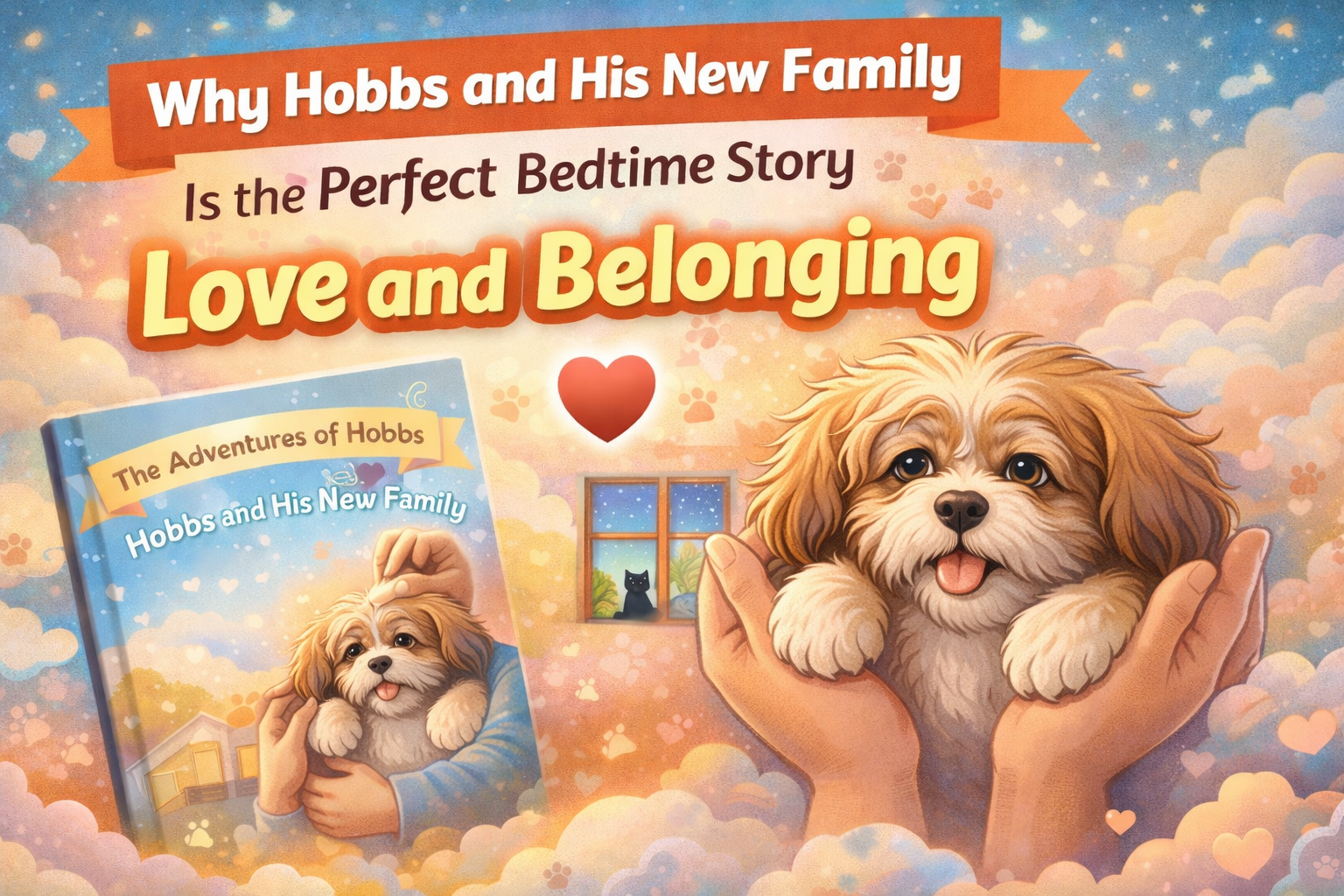
The Adventures of Hobbs follows a warm-hearted animal character, and its themes of friendship, family, and belonging give parents natural openings to ask, “Who makes you feel safe?” or “What does being a good friend look like?”
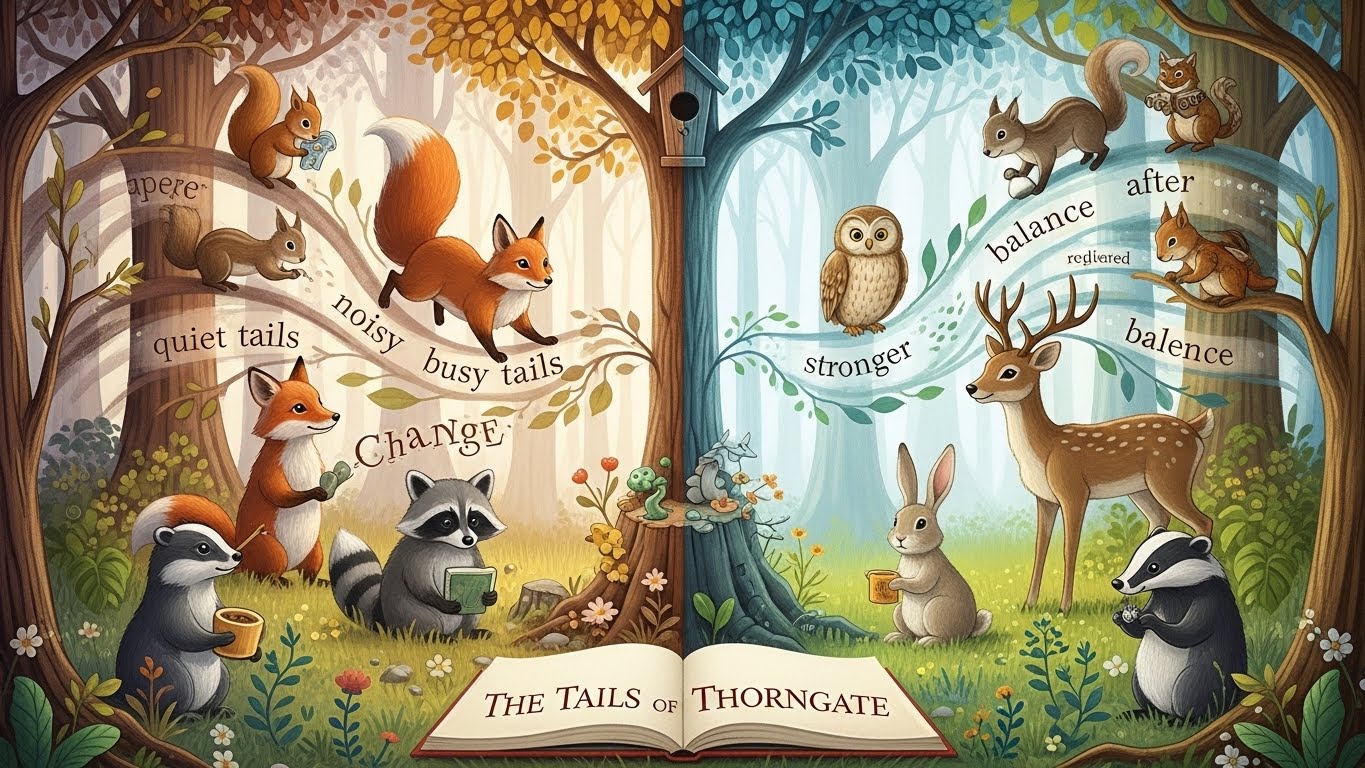
The Tails of Thorngate is set in a woodland world of animal characters, with themes of nature, change, and hope. Change can stir up many feelings in a child at once, so it’s a good place to talk about what feels exciting, what feels scary, and what helps along the way.
Frequently Asked Questions
Stories show feelings in context, give children words for them, and let them see emotions from a safe distance. That makes it easier to recognize the same feelings in themselves.
There’s no fixed starting point. Even toddlers can begin by pointing to happy and sad faces in picture books. Conversations can grow more detailed as your child does.
Children who can name what they feel are often better able to ask for help, work through disagreements, and notice how others feel. It’s a skill that develops over many years.
Listen without rushing to fix, accept the feeling even when the behavior needs guidance, and keep conversations low-pressure. Storytime is a natural, comfortable setting for this.
Look for stories with relatable characters, honest but gentle treatment of hard feelings, and illustrations that show expressions clearly. Books about friendship, family, and change are good places to begin.
Yes, in supportive ways. Imagining a character’s perspective gives children practice in understanding others. Real-life examples and conversations at home help that practice stick.
Explore Stories That Make Room for Big Feelings
Every child has days when their feelings are bigger than their words. A shared story, a cozy spot, and a few unhurried questions can help them find those words, one page at a time.
If you’re looking for stories about love, kindness, friendship, and family, visit the Beth Roberts Bookshelf book page to explore The Adventures of Hobbs and The Tails of Thorngate, and find your family’s next storytime favorite.