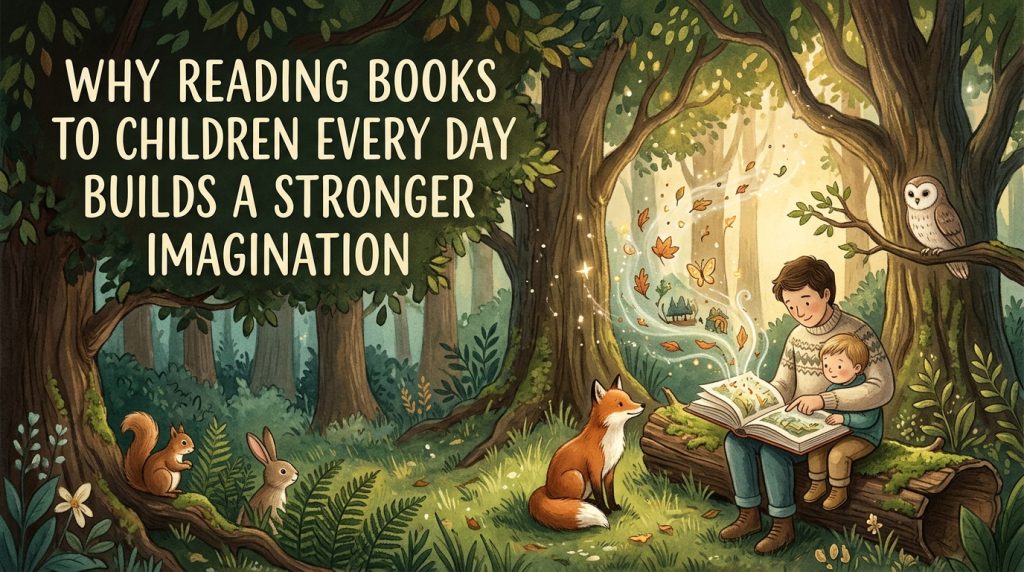
It’s a school night, and your child has already asked for “just one more chapter” twice. You’re tired, the dishes are waiting, and yet somewhere between the second page and the third, something shifts. Their eyes drift to the middle distance. They aren’t bored. They’re somewhere else entirely, standing in a forest you’ve only described with words.
That quiet moment is one of the best benefits of reading to children, and it’s worth protecting. When you read books to children every day, you hand their imagination a steady supply of places, characters, and problems to turn over in their minds. Here’s how that works, and how to make it part of your family’s rhythm without it becoming another chore.
Why Reading Books to Children Every Day Matters
The importance of reading to children goes well beyond vocabulary and school readiness. A story is one of the few things a young child experiences that isn’t fully finished for them. Cartoons and games show everything. The book provides the basic structure, while the child uses their imagination to complete the story.
Where Imagination Does Its Real Work
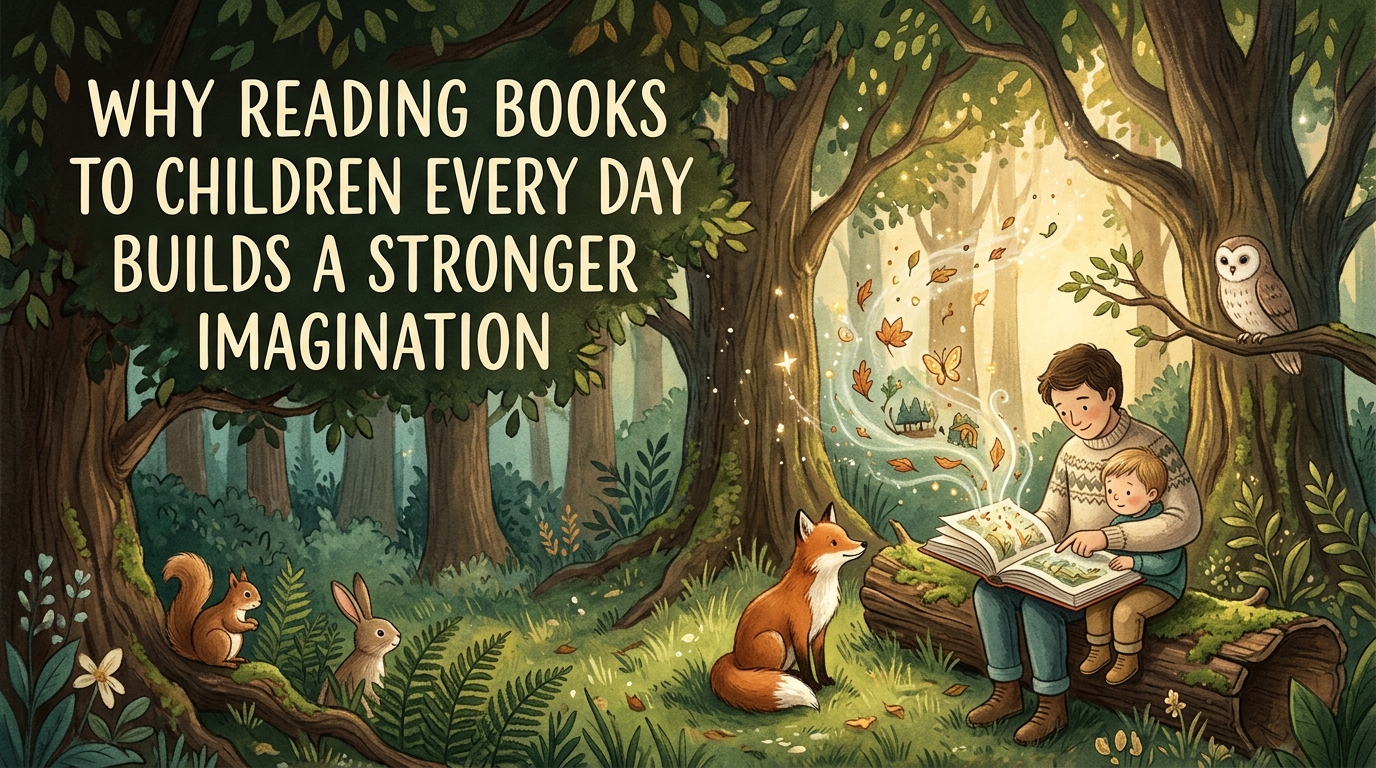
When you read, “A little fox slipped beneath the garden fence,” there’s no screen deciding what the fox looks like. Your child chooses the color of its fur, the shape of the fence, even the time of day. That’s how reading improves imagination: the child becomes the casting director, set designer, and audience all at once. Doing that a little each day, the way you’d practice anything, makes it come more easily.
Why Rereading the Same Book Is Not a Problem
If your child demands the same story for the fortieth time, take heart. Familiar books let children notice new details, predict what’s coming, and even change the story in their heads. Many parents find that a favorite book eventually turns into pretend play on the living room floor. That’s imagination spilling over, and it’s exactly what you want.
How Reading Aloud to Children Sparks Creative Thinking
Children’s imagination and creativity grow when they have something to wonder about. Stories supply plenty of it.
Trying On Other Lives
Books let children walk through experiences they haven’t had yet: a lonely creature finding a friend, a nervous newcomer in a new place, a small character facing something big. Each one gives a child a chance to ask, “What would I do?” That question is the root of creative thinking, and it also quietly builds empathy.
Curiosity and the Questions That Follow
Pay attention to what happens after the last page. Children who are read to often have a lot to say: Why did the character do that? Where does that river go? Could that really happen? You don’t need perfect answers. Sometimes the best reply is, “I wonder. What do you think?” Letting those questions breathe turns a ten-minute story into a conversation your child will remember.
Making Reading Aloud Something Everyone Enjoys
There’s no special talent required. Still, a few small habits make reading time something children look forward to.
- Use different voices, even silly ones. Your child won’t judge your accents.
- Pause before turning the page and ask what might happen next.
- Let your child hold the book, turn the pages, or point to things they spot.
- Follow their lead if they want to linger on one picture for a while.
Choosing Children’s Books for Imagination
The best children’s books for imagination tend to share a few traits: vivid settings, characters with real feelings, and a little room left open for the reader to wonder. Age matters too. Picture-rich stories suit younger listeners, while slightly longer tales with more plot work well as children grow.
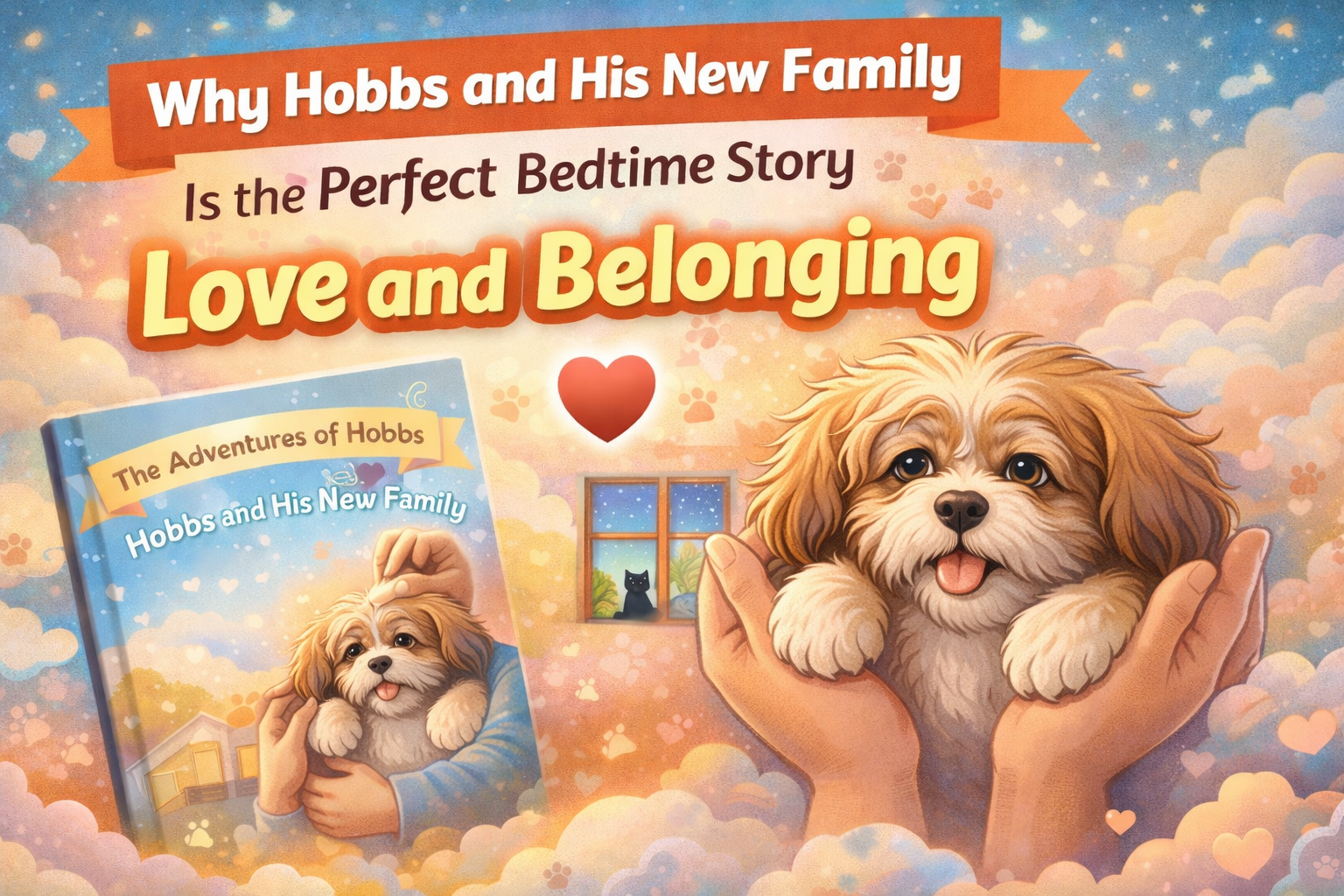
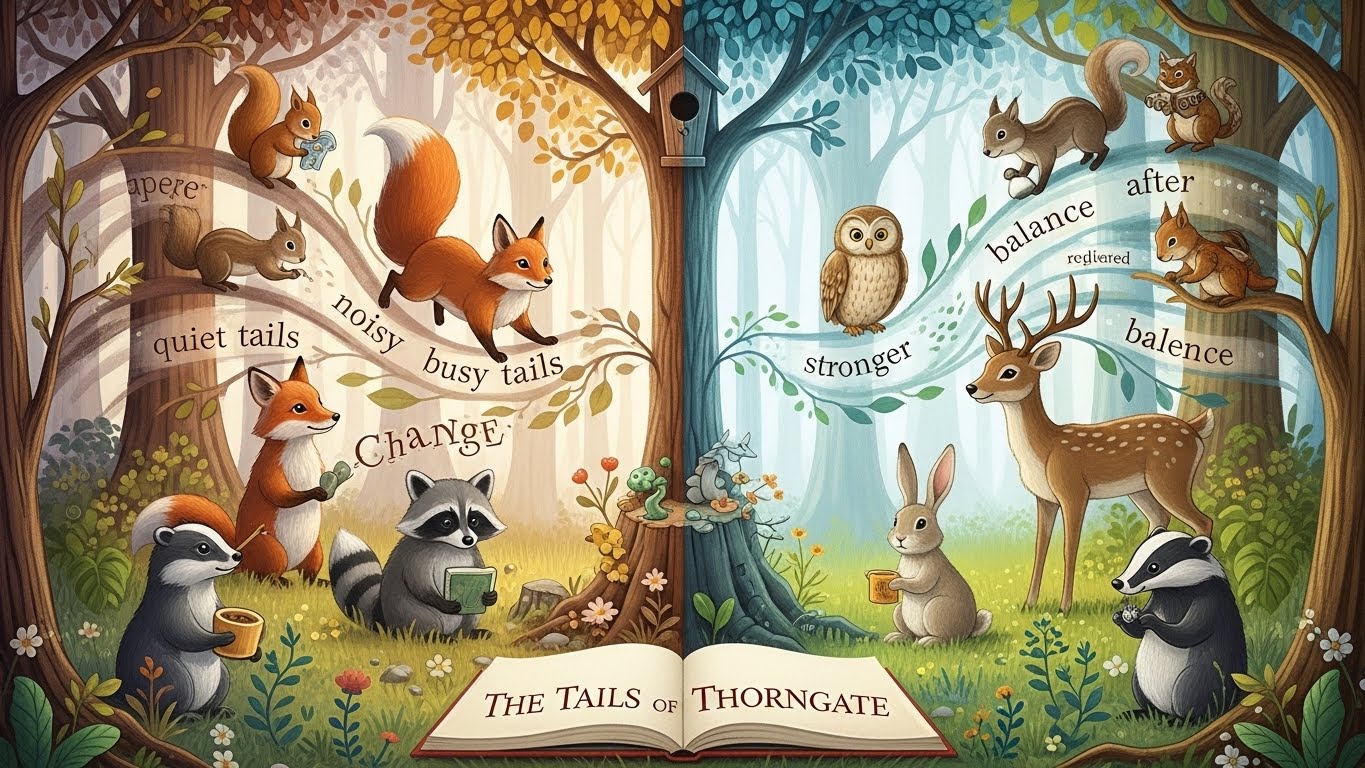
Nature stories are especially good at this. A forest, a pond, or a hillside gives children a world to explore without anyone needing to explain it. The Tails of Thorngate leans into this with its woodland setting and animal characters, inviting children to picture a whole community living just out of sight. The Adventures of Hobbs takes a warm, family-minded look at friendship through the eyes of an endearing animal, which gives parents plenty to talk about afterward.
Building Reading Habits for Children That Last
A daily routine doesn’t have to be elaborate. It just has to be easy to repeat.
Pick a Moment and Protect It
Bedtime is the classic choice, but it isn’t the only one. Some families read after breakfast, in the car line, or while dinner cooks. What matters is that it happens at roughly the same time, so your child begins to expect it.
Keep It Short and Flexible
Ten or fifteen minutes is enough. On a rough day, one picture book still counts. Consistency matters far more than length, and a relaxed routine is the one you’ll still be keeping months from now.
Frequently Asked Questions
Daily reading builds imagination, strengthens listening and language, encourages curiosity, and creates a calm, close routine between parent and child.
Books give children words rather than finished images, so they picture the settings and characters themselves. That mental work is imagination in action.
Ten to twenty minutes works well for most families. Shorter, regular sessions are better than long, occasional ones.
There’s no wrong age. Many parents begin in infancy, simply to share their voice and a sense of rhythm. Interest and attention grow with time.
Look for stories with rich settings, expressive characters, and open-ended moments. Animal tales and nature adventures are often favorites.
Choose a consistent time, keep books within easy reach, and let your child help pick what to read. Keep it enjoyable, not obligatory.
Let the Stories Begin
The benefits of reading to children show up in small ways first: a new question, a made-up game, a quiet “read it again.” Over time, those small moments add up to a child who sees possibilities everywhere.
If you’re looking for a place to start, explore Beth Ann Roberts’ bookshelf and meet the creatures of The Tails of Thorngate and The Adventures of Hobbs. You can also learn more about the author’s heart for nature, kindness, and family on the About page, or find more reading ideas on the blog. Grab a book, find a cozy spot, and see where your child’s imagination takes you both.